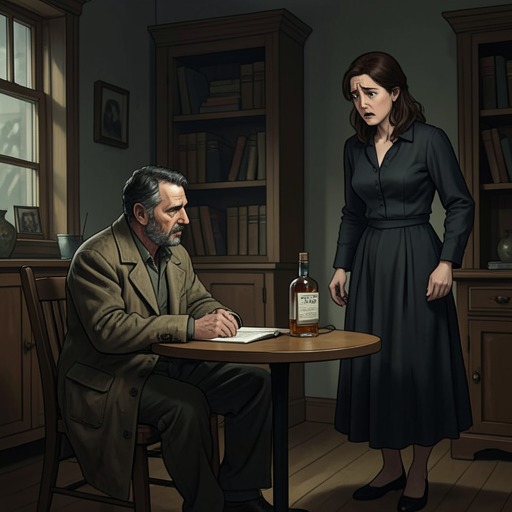
Annabella Lowborough
The Tenant of Wildfell HallAnnabella Lowborough’s concealed relationship with Arthur Huntingdon turns private desire into a crisis that Helen Huntingdon cannot treat as merely personal. The evidence presents Annabella through the account Helen entrusts to Gilbert Markham: first as the woman whose voice gives away an illicit meeting, then as a rival who seeks Helen’s silence, and finally as someone Helen warns she will expose if the affair continues. Her part in the story makes the costs of adultery legible not only as marital betrayal but as a conflict over what Helen owes to truth, conscience, and another woman’s husband.
Identity and Place in the Story
Annabella is Lady Lowborough, the wife of Lord Lowborough. The evidence does not supply her family background or a fuller independent history; her characterization instead emerges from her conduct in the circle around Helen and Arthur. She is present in the novel’s account as both a participant in an adulterous attachment and a woman whose speech reveals that she knows the attachment is dangerous.
Her identity is also filtered through a nested narrative. Gilbert’s outer account is addressed to Halford, but Gilbert reads Helen’s manuscript and makes it the means by which the past is disclosed. The reader therefore encounters Annabella not through an independent narrative voice but through Helen’s recollection of events, later selected and transmitted by Gilbert. That structure gives Annabella a sharply defined role in Helen’s moral and emotional history while leaving her motives and private life beyond what Helen reports.
The Affair Revealed
The relationship becomes unmistakable when Helen goes to the shrubbery and hears Annabella say that they have lingered too long and that he will return. Arthur answers her affectionately and proposes that she cross the lawn quietly while he follows later. The exchange establishes that their meeting is secret and that they are coordinating their movements to avoid discovery; Helen’s presence changes the scene from concealed intimacy into witnessed evidence.
The discovery matters because Helen has been struggling to determine whether Arthur can still be trusted. She has hoped for some truth that might restore her former opinion of him, but the overheard conversation confirms the opposite. The affair is not presented as a rumor or an accusation made by an outsider: Helen herself hears the pair arranging their departure. Annabella’s brief words therefore become the hinge between suspicion and knowledge, and the private betrayal enters the history Helen records.
Rivalry and the Demand for Silence
Later, Annabella asks to speak to Helen alone, sending Milicent away and closing the library door behind them. The staging makes the encounter private but not intimate: Annabella has deliberately claimed Helen’s attention, and Helen complies despite finding her behavior impudent. Annabella admits that she cannot renounce what she values more than life, then addresses Helen as a rival and asks whether she will tell Arthur. Her appeal casts disclosure as a test of Helen’s generosity or pride, as though Helen’s response, rather than Annabella’s continuing affair, were the central moral question.
This request puts Helen in a difficult position. Annabella is not simply asking her to forgive an injury; she is asking her to conceal the relationship from the man who is being betrayed. Helen’s answer is not recorded in the supplied evidence, so the exchange should not be mistaken for a settled agreement to keep quiet. What is clear is that Annabella recognizes the danger of exposure and tries to make Helen’s silence part of the arrangement. The rival’s appeal thus exposes an additional layer of conflict: the affair threatens to involve Helen in a deception she has not chosen.
Helen’s Warning and the Stakes of Disclosure
Helen eventually makes her position explicit. On the day of Annabella’s arrival, she follows her into her chamber and tells her calmly that if she finds reason to believe Annabella is still continuing her criminal connection with Mr. Huntingdon, she will consider it her duty to inform Lord Lowborough, or at least awaken his suspicions. Helen acknowledges that this disclosure may be painful and its consequences dreadful, but does not treat those consequences as a reason to promise silence.
The warning is conditional, not a claim in the supplied passage that Helen has already told Lord Lowborough. It shows Helen setting a limit on her involvement: Annabella may have asked her to protect the secret, but Helen will not let that request override what she believes she owes to the injured husband. The contrast between Annabella’s private appeal and Helen’s measured declaration also marks a change in the balance between them. Annabella had tried to enlist Helen’s magnanimity; Helen now makes clear that her judgment will depend on whether the liaison continues.
Narrative Significance
Annabella’s importance lies less in a complete portrait of her character than in the pressure her affair creates on Helen’s ethical choices. The overheard conversation gives Helen direct knowledge; the library confrontation makes the affair a rivalry as well as a betrayal; and the later warning turns knowledge into a question of responsibility. These stages keep the narrative focused on what a woman can do when another woman asks her to conceal conduct that violates a marriage.
The manuscript frame further shapes Annabella’s significance. Gilbert first receives Helen’s volume as a private confidence: Helen tears away a few leaves, gives him the remainder, and calls him back to demand that he return it after reading and reveal its contents to no living person. Gilbert says he reads it in full rather than offering an abbreviation. The surviving account is therefore neither an unmediated record nor Annabella’s own testimony; it is Helen’s account, preserved and passed on by Gilbert within his letter to Halford. That chain of disclosure makes secrecy itself a recurring issue in Annabella’s story: she seeks secrecy for the affair, Helen restricts the telling of her manuscript, and Gilbert eventually makes the concealed past readable to another person.